📢 Fresh Content: PLC Troubleshooting Tips That Work Across Any Platform | Click to read on PLCDocs!
Topic hub
Functional Safety
Emergency stop circuits, safety relays and safety PLCs, dual-channel and EDM monitoring, light curtains, safe torque off, and what ISO 13849-1 performance levels and IEC 62061 SIL actually require.
Safety circuits are the one part of a control system where the standard, not your preference, decides the design. The two ideas that carry most of the weight are redundancy (two channels that must agree) and monitoring (something that notices when a contact welds). Get those right and the paperwork mostly follows.
5 articles in this hub
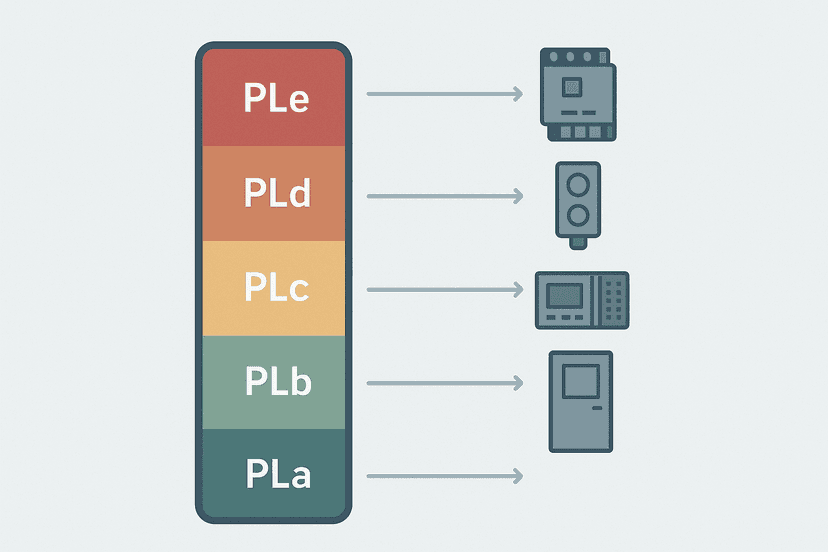
ISO 13849-1 PL Levels: What They Mean in Practice
ISO 13849-1 Performance Levels (PLa to PLe) define how reliable a safety function must be. Learn how PL is determined, how it compares to SIL, and what it means for your machine design.
Jul 24, 2026 · 9 min read
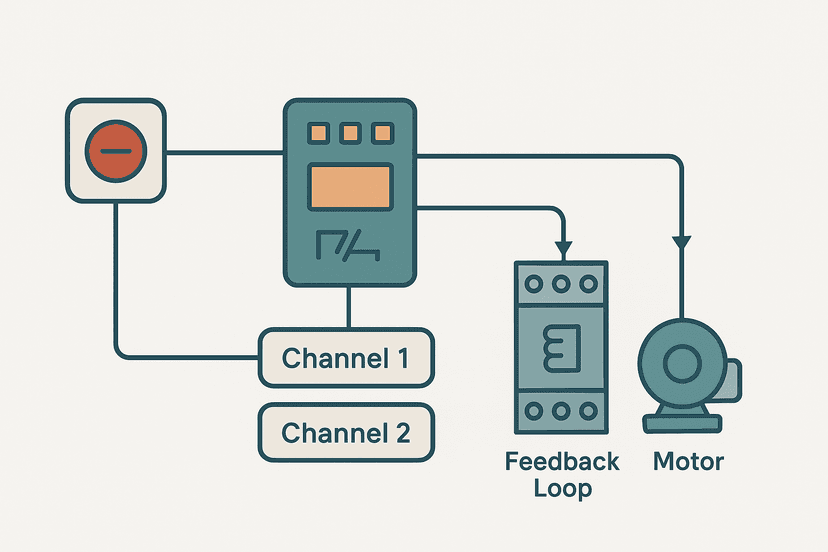
Emergency Stop Circuit Wiring: Categories Explained
Learn how emergency stop circuits are wired, what ISO 13850 categories mean in practice, and how dual-channel monitoring actually works on real hardware.
Jul 13, 2026 · 10 min read
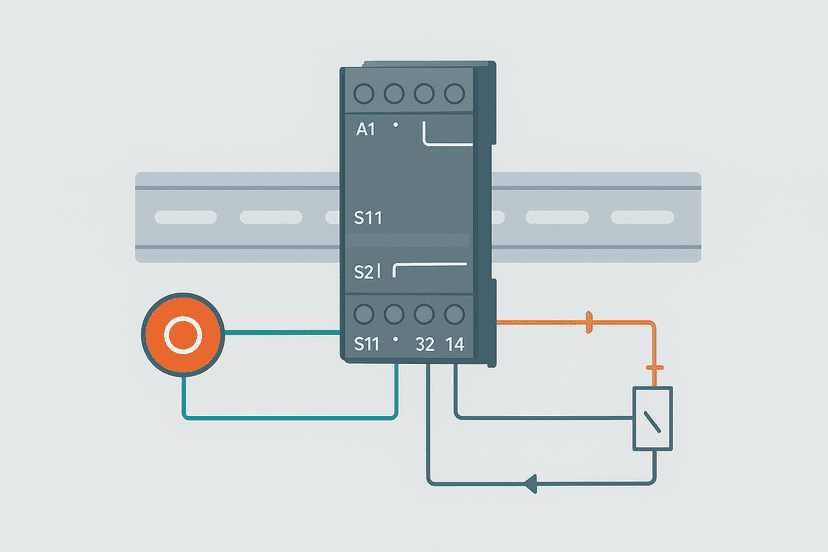
Safety Relay Wiring: Circuits Explained
Safety relay wiring demystified: terminal functions, dual-channel E-stop circuits, feedback loops, manual vs automatic reset, and how the safety output connects to a PLC.
Jul 1, 2026 · 8 min read
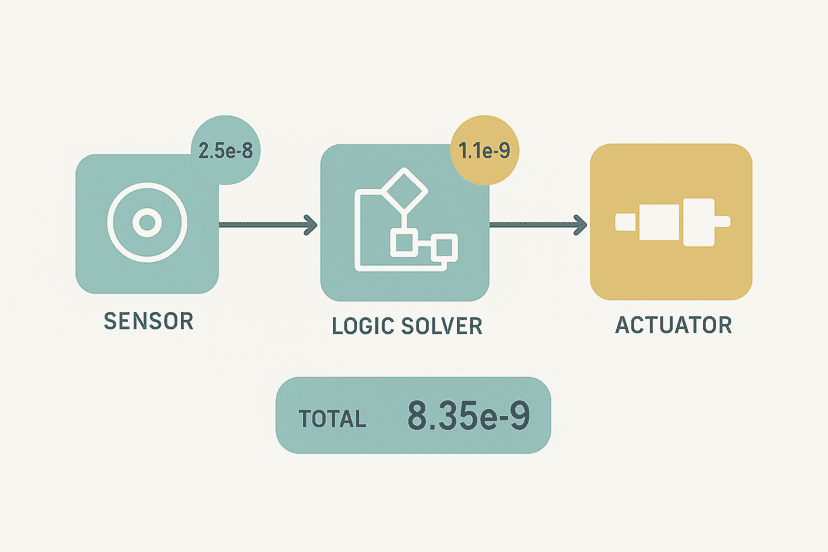
IEC 62061 PFHd Calculation: A Step-by-Step Guide
PFHd is the number that decides whether your safety function hits SIL 2. Here is how to calculate it correctly under IEC 62061, with a real worked example.
Jun 27, 2026 · 8 min read
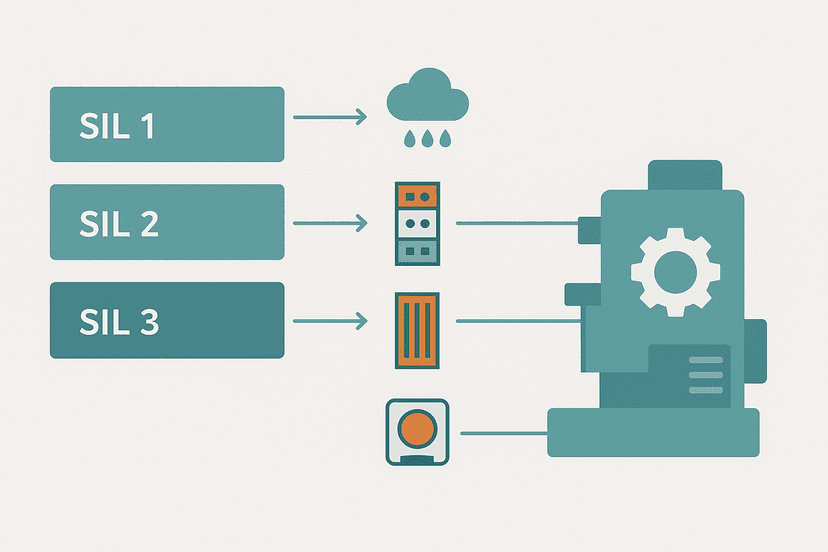
IEC 62061 SIL Levels: What They Actually Mean
IEC 62061 SIL levels define how reliable your safety function must be. Here's what SIL 1, 2 and 3 really mean, how PFH is calculated, and common mistakes to avoid.
Jun 27, 2026 · 8 min read